March 3 2025
Whether you’re a startup founder racing to MVP or a senior executive overseeing digital transformation, you need a project management approach that evolves with change.
That’s where Agile Project Management comes in.
At its core, Agile Project Management is a way to manage projects by breaking them down into smaller, manageable chunks called “iterations” or “sprints.”
Instead of planning every detail up front (like in traditional Waterfall models), Agile methodology embraces change. It focuses on continuous improvement, frequent delivery, and team collaboration.Think of Agile like building a mobile app in phases: first, you launch a basic version with core features, gather feedback, then refine and expand it in subsequent updates. Agile enables that feedback loop to happen rapidly—weeks instead of months.
It’s especially useful for complex projects with evolving requirements, such as custom mobile app development, AI integration, or blockchain-based solutions. Agile ensures you’re building the right product, not just the one you planned six months ago.
Agile isn’t a single method, it’s a mindset supported by several structured frameworks. Here are the most commonly used Agile methodologies:
Scrum is the most widely adopted Agile framework. It divides work into time-boxed sprints (usually 2-4 weeks) and emphasizes daily stand-up meetings, backlogs, and retrospectives. It’s ideal for teams developing complex software systems and needing rapid iteration.
Key roles in Scrum include:
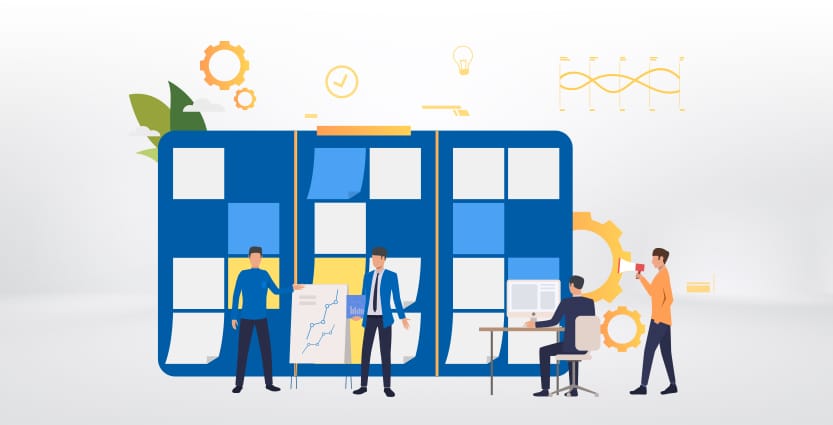
Kanban focuses on visualizing workflow and limiting work-in-progress (WIP) to boost efficiency. It uses a board (physical or digital) with columns like “To Do,” “In Progress,” and “Done” to track tasks. It’s less rigid than Scrum, making it great for continuous delivery environments like DevOps teams or customer support.
Originating from manufacturing, Lean Agile prioritizes eliminating waste and delivering maximum value with minimal resources. It’s useful for startups looking to stay lean and iterate quickly without overcommitting.
Each methodology has its own strengths, and many teams use hybrid models, especially in enterprise settings where flexibility is crucial.
Agile thrives on transparency and communication, and the right tools make it easier to plan, track, and deliver work efficiently. Here are two popular Agile project management tools used by top development teams:
Jira is a robust tool designed for Scrum and Kanban workflows. It allows teams to create user stories, assign tasks, manage sprints, and generate detailed reports like burndown charts and velocity tracking. Jira integrates with tools like Confluence, Bitbucket, and Slack, making it ideal for scaling Agile across an organization.
Trello uses a visual Kanban-style board that’s intuitive and flexible. It’s great for smaller teams or startups needing a lightweight solution. With drag-and-drop functionality, customizable cards, and integrations with tools like Google Drive, Trello keeps teams aligned without overwhelming them.
Other notable mentions include Asana, Monday.com, ClickUp, and Notion—each with Agile capabilities tailored for different team sizes and use cases.
Agile isn’t a one-size-fits-all approach, but it shines in specific scenarios—especially for mobile app development projects, digital products, or anything involving innovation and uncertainty.
Here’s when Agile is the right choice:
If the final product vision isn’t set in stone—or if stakeholders anticipate changes—Agile lets you adapt quickly without derailing progress.
Agile’s iterative cycles mean you can release a functional version sooner, gather user feedback, and improve. For startups, this approach validates ideas fast and reduces risk.
Agile promotes constant communication among developers, designers, QA, and business stakeholders. This is vital for building user-centric solutions.
Instead of waiting months to demo a final product, Agile encourages showcasing progress every few weeks. This keeps stakeholders engaged and the team aligned.
Agile may not be ideal for projects with fixed scopes, budgets, and timelines, like government contracts or infrastructure projects. In those cases, a Waterfall or hybrid model might be more appropriate.
Agile Project Management is a proven strategy for delivering better digital products, faster. For startups looking to build MVPs, enterprises modernizing legacy systems, or any business seeking mobile app development services, Agile is the compass that keeps your project aligned with business goals.