
13 Aug 2026
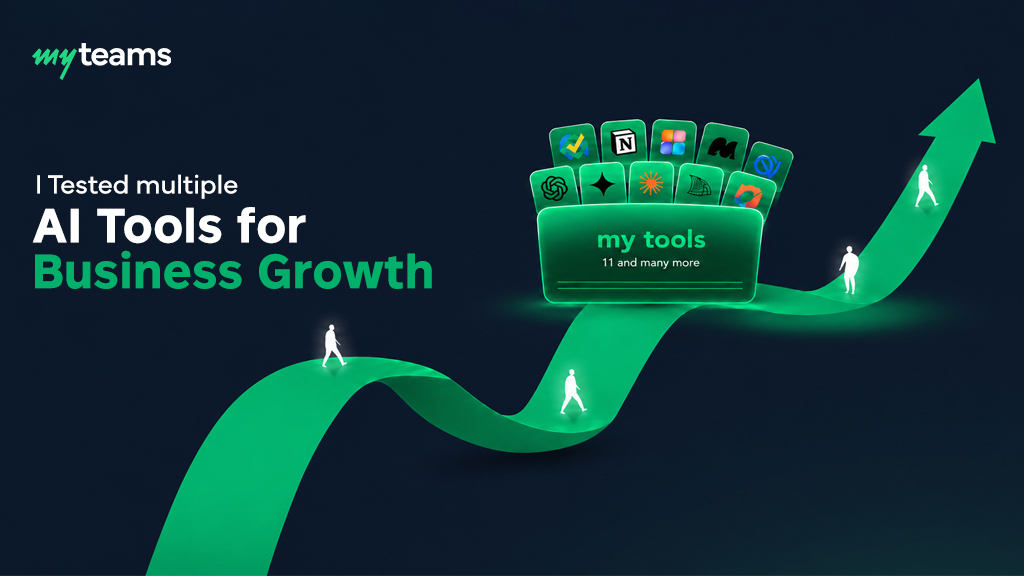
I spent a lot of time testing AI tools.
Probably too much time, if I’m being honest.
A few those whose names disappeared from my memory almost as quickly as their free trials expired.
And here’s the inconvenient bit, they weren’t just gimmicks. They were good.
ChatGPT helped me write faster. Claude made long documents easier to work through. Perplexity shortened the messy first stage of research. Gemini gave me another perspective when I wanted to test an idea. Some of the smaller tools solved narrow problems surprisingly well.
So, technically, the experiment was working.
I was saving time.
Five minutes here. Ten minutes there. Maybe half an hour on a task that used to swallow an afternoon.
Then I noticed something uncomfortable.
I was spending an enormous amount of time managing the tools that were supposed to give me my time back.
That was when my thinking about AI changed. Read on this blog, to know what.
At first, I judged every tool on its own.
Could ChatGPT help me draft an email?
Yes.
Could Perplexity speed up research?
Yes.
Could Claude help me make sense of a large document?
Definitely.
Could an automation platform move information between two apps?
Also yes.
On paper, it looked brilliant.
My actual working day looked less brilliant.
I would research something in one tool, carry the findings into another, rewrite them somewhere else, copy the final version into a document, and then move parts of that document into another platform.
If I felt ambitious, I would build an automation to connect two of those steps.
If it broke, I would spend the next hour working out why.
Sometimes an API has changed. Sometimes a field was mapped incorrectly. Sometimes the workflow performed beautifully with test data and fell apart the moment a real client sent information in a format no sensible person would have predicted.
And sometimes?
I had simply built it badly.
I was using AI. I was automating work. I had subscriptions, workflows and enough browser tabs to make the whole operation look impressively advanced.
But the business itself was not becoming much easier to run.
I had created a more sophisticated way to do manual work.
That was the real problem.
The tools were supposed to work for me.
Instead, I was the one trying to build generative AI workflow automation, such as:
Moving information between systems. Updating prompts. Repairing workflows. Testing everything again because one small part of the process had changed.
The individual tools were saving me minutes.
The system was costing me hours.
Those are not the same calculation.
And I suspect this is where many companies struggle to create meaningful value from AI in business.
They try ChatGPT. Add another AI product. Experiment with an automation platform. Build a few internal workflows. Everyone feels as though the company is becoming more advanced.
But nobody steps back to ask the less exciting question.
Is the work actually becoming easier?
In my case, the honest answer was no.
Not yet.
For a while, I wondered whether I had expected too much.
Maybe the productivity claims were inflated. Maybe AI was excellent at producing impressive demonstrations and less useful inside the untidy reality of a business.
But when I looked at the problem properly, the tools were not really failing me.
They were disconnected.
One tool handled research. Another helped with writing. Another automated task. Our existing software handled something else entirely. Client information lived in one place. Internal notes lived in another. Important context was buried inside emails, documents and, occasionally, somebody’s memory.
I did not need another AI tool.
I needed the tools I already had to belong to the same process.
Much later, I came across research into generative AI and workplace productivity that gave more careful language to what I had already discovered.
Technology was only one part of the story.
The work around it mattered too.
And in my case, that was the part I had overlooked.
I had already learned the basics of automation, so the next step seemed obvious.
Build more.
So, I began experimenting with AI agents for business automation that could classify leads, create records, generate summaries, draft responses and prepare follow-up tasks.
When the first version worked, it felt like magic.
There is something deeply satisfying about watching a process complete itself for the first time. No chasing. No copying. No tiny administrative task waiting patiently to be forgotten.
Then real life arrived.
People did not complete forms correctly. Clients sent information in wildly different formats. Someone renamed a field. A five-step process quietly became a seven-step process. A team member found a new way of working and forgot to tell the automation.
The workflow did exactly what it had been told to do.
The business, inconveniently, did not.
That was when I understood that building an automation is often the easy part.
Building one that understands the real process, handles exceptions, remains reliable and changes with the business is something else entirely.
And once again, I was losing time.
This was the point when the experiment stopped being about technology.
It became a business question.
Could I keep learning how to connect everything myself?
Probably.
Could I spend evenings watching tutorials, troubleshooting integrations and convincing myself that the next workflow would finally complete the system?
Absolutely.
Could I eventually make most of it work?
I think so.
But should I?
That was the question I had avoided.
My job was not to become an AI automation engineer. My job was to grow the business.
There is a point where doing something yourself stops being resourceful and starts becoming expensive.
Not because of what you pay.
Because of what you stop doing.
Every hour I spent repairing an automation was an hour I was not spending with a client. Every afternoon lost to testing was an afternoon not spent on sales, strategy, service or opportunity.
The workflows were not free.
I was paying for them with attention.
So I changed direction.
I partnered with a company “Myteams” who specialised in AI integration and workflow automation.
I expected them to recommend more tools.
They didn’t.
They asked questions.
What happens when a lead comes in? What happens after a client meeting? Where is information entered twice? Which tasks are repeated every day? Where do delays happen? Which steps require judgement? Which ones simply require someone to move information from one place to another?
I had been starting with technology.
That sounds obvious now. It did not feel obvious when I was busy comparing features, testing prompts and deciding which model produced the nicest answer.
Once we looked at the business as a series of connected processes, the real problems became much easier to see.
I had been asking small questions.
Can AI write this?
Can I automate that?
Can this app connect to that one?
The integration team asked a larger question.
What should happen from beginning to end?
Take a new business inquiry.
Previously, it might arrive through a form or email. Someone would read it, enter it into an internal system, research the company, decide whether the opportunity looked relevant, draft a response, create a reminder and then remember to follow up.
No single step was especially difficult.
Together, they consumed time every day.
So we stopped trying to automate one step and mapped the whole journey.
That was the first time automation felt useful instead of merely impressive.
And that was a good thing.
Before the integration, I was always aware that I was “using AI.”
Open ChatGPT. Open Claude. Move something into Perplexity. Write a prompt. Copy the answer. Carry it somewhere else.
Afterwards, I thought about the AI much less.
Information could be summarised in the background. Repetitive data could be structured. Drafts could be prepared. Internal tasks could be created. Context could move to the right place without a person manually carrying it there.
The technology stopped demanding attention and started supporting the work.
That may be the best test of a useful system.
Not how often you notice it.
How often you no longer have to.
We also kept people involved where judgement mattered. I never wanted automation to remove humans from decisions where experience, empathy or accountability added value.
The aim was to remove the work around the decision.
Not the decision itself.
At first, I measured success in time.
Research preparation became faster. Client information was easier to organise. Follow-ups were less dependent on memory. Repetitive administration began to disappear. Documents and messages could be prepared with the right context already available.
But the more valuable changes were not just about minutes saved.
We responded faster without making communication feel automated.
AI could collect context, summarise earlier interactions, identify what a client appeared to need and prepare a first draft. A person could then review the response before it went out.
Speed without surrendering judgement.
That mattered.
Proposals also became easier. Before, AI could help me write one, but first I had to find the meeting notes, search through emails, gather research, reconstruct previous conversations and explain all of it to the model.
The writing was never the real bottleneck.
Context was.
Once the right information was connected, the AI became far more useful. It no longer began every task with amnesia.
And growth started to feel lighter.
Service businesses have a simple problem. More clients usually bring more emails, meetings, documents, follow-ups, coordination and information to manage.
If every new client creates the same amount of manual work as the last one, growth eventually begins to feel like punishment.
Automation did not remove that pressure completely. I do not think it ever will.
But it reduced the repetitive work attached to growth. We could handle more activity without creating the same increase in operational weight.
AI did not magically produce customers.
It created capacity.
Capacity for sales. Client relationships. Strategy. Better service. New opportunities.
The work that actually moves a business forward.
I still use ChatGPT regularly. Claude still has its place. Perplexity remains useful for research. Gemini still enters the conversation when I want another perspective.
The tools were never the enemy.
Collecting them without improving the process was the problem.
A brilliant AI model inside a terrible workflow does not create a good workflow.
Sometimes it simply helps the terrible workflow move faster.
Looking back, the biggest mistake I made was asking the wrong first question.
I asked:
“What can this AI tool do?”
Now I ask:
“Where is the business losing time?”
One question leads to features.
The other leads to outcomes.
If I were starting again, I would still experiment.
I would test ChatGPT. Try Claude. Explore AI research. Build a simple automation or two. You need enough direct experience to understand what these tools can do and where their limits begin.
But I would map the work before building the system.
Where are people repeating the same task? Where is information copied manually? Where are clients waiting? What depends on someone remembering to do it? Where are people searching for information that already exists? Which steps need judgement, and which merely move data around?
Then I would look at AI.
Not before.
I would also recognise the moment when experimentation needs to become implementation.
They are not the same skill.
There is nothing wrong with building things yourself. But if you run a business, you eventually have to decide whether spending dozens of hours learning integrations, fixing workflows and maintaining automations is genuinely the best use of your time.
For me, it wasn’t.
Working with people who understood both integration and business processes did more for me than another five AI subscriptions ever could.
Myteams did not give me technology I could never access.
They made the technology I already had work together.
That was the difference.
After all the tools, prompts, tutorials, and broken workflows, I came away with a different answer from the one I had expected.
The individual AI tools helped.
But they were not the breakthrough.
Their real value appeared when they became part of how the business actually worked.
That was the turning point.
The hours started coming back. Repetitive work began disappearing. Information moved faster. The tools we already had became more useful. AI was no longer producing impressive outputs alone. It was creating real capacity within the business.
And through it all, people remained involved wherever judgement, experience, and relationships mattered.
So yes, test the tools.
But do not confuse using AI with improving a business.
Look closely at where time is being lost. Build a better process around it. Use AI where it adds something meaningful. Automate the repetition, but keep people at the heart of the decisions that require understanding.
And when the system becomes too complex to build well on your own, working with experienced professionals who provide AI development services can help bring all the pieces together.
That is what I eventually did with MyTeams, a team that builds these systems every day.
What finally helped my business grow was not another chatbot.
Not another subscription.
Not another clever prompt.
It was having the right expertise beside me, helping me turn the technology I already had into something I could finally use to its fullest potential.
The one that solves a real bottleneck. A powerful tool inside a poor process only helps the poor process move faster.
It can handle repetitive work, connect information and prepare the next step. Your team gets more time for decisions, relationships and growth.
Usually, technology is not the problem. Unclear processes, disconnected systems, messy data and missing human oversight are.
Yes, but start small and experiment. And when the workflow becomes critical, complex or difficult to maintain, bring in experienced AI integration professionals.